
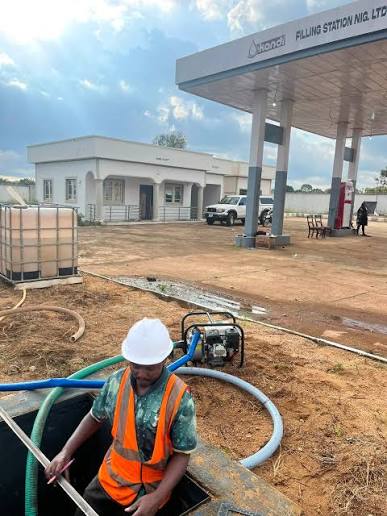
Underground Tank Calibration: A Complete Guide to Accurate Fuel Measurement in Nigeria
Underground tank calibration is a critical process for businesses that store diesel (AGO), petrol, chemicals, and other liquid products in underground storage tanks. Because the tank itself is buried below ground, accurately determining how much product it contains cannot be achieved reliably through visual inspection alone. A professionally calibrated underground tank provides a dependable relationship between the measured liquid level and the actual volume stored.
For Nigerian businesses that depend on fuel storage for generators, industrial machinery, production operations, vehicles, and other equipment, accurate tank measurement is essential for inventory control, procurement planning, financial accountability, safety, and operational efficiency.
ENX Energy and Chemicals Nigeria Limited, located at 21 Unity Road, Off Toyin Street, Ikeja, Lagos, Nigeria, provides industrial energy and chemical solutions to procurement managers, factories, corporate organisations, construction companies, hotels, hospitals, and other commercial and industrial users across Nigeria.
The company’s solutions include diesel (AGO) supply, fuel equipment, industrial Lubricants distribution, and fine and specialty industrial chemicals.
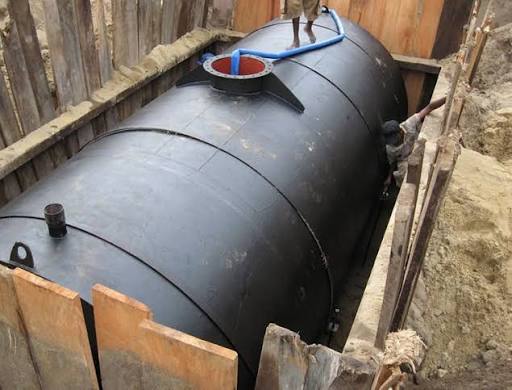
What Is Underground Tank Calibration?
Underground tank calibration is the technical process of determining the actual relationship between the liquid level inside an underground storage tank and the corresponding volume of liquid contained within it.
In practical terms, calibration allows an operator to answer questions such as:
- How many liters are currently inside the underground tank?
- What volume corresponds to a particular tank level?
- How much diesel was received during a delivery?
- How much fuel has been consumed?
- Is the quantity recorded by the monitoring system consistent with actual inventory?
- Is there an unexplained difference between expected and measured stock?
A calibrated tank normally has a calibration table or volume chart showing the relationship between liquid level and volume.
This information can then be used with manual or electronic measurement systems.
Why Underground Tank Calibration Is Different
Underground tanks present particular measurement challenges because most of the tank is inaccessible once installed.
An above-ground tank can generally be inspected externally. An underground tank, however, may be covered by concrete, soil, paving, or other structures.
This makes accurate initial measurement and periodic verification particularly important.
Several factors can affect underground tank measurements, including:
- Tank geometry.
- Tank dimensions.
- Tank orientation.
- Installation conditions.
- Ground movement.
- Tank deformation.
- Settlement.
- Internal corrosion.
- Temperature.
- Product density.
- Condition of measuring equipment.
- Accuracy of level sensors.
- Position of the tank’s reference point.
Consequently, relying exclusively on a nominal tank capacity—for example, assuming a tank labelled “30,000 litres” always contains exactly the expected volume at a particular dip level—can produce inaccurate inventory results.
Underground Tank Calibration for Diesel and AGO Storage
Diesel storage is one of the most common applications for underground tanks in commercial and industrial environments.
A facility may use an underground diesel tank to supply:
- Standby generators.
- Industrial generators.
- Construction machinery.
- Fleet vehicles.
- Boilers.
- Production equipment.
- Agricultural machinery.
- Heavy-duty equipment.
For a company consuming thousands of liters of diesel, even a small measurement discrepancy can become financially significant over time.
Professional underground tank calibration helps establish a more dependable basis for determining the quantity of diesel stored.
This is especially useful when diesel deliveries are received in bulk and the organisation needs to compare:
Quantity delivered + opening stock − consumption = expected closing stock
If the opening or closing stock is inaccurate, the entire reconciliation becomes questionable.
Underground Tank Calibration and Fuel Inventory Management
Fuel is a major operating cost for many Nigerian businesses, particularly organisations that depend on diesel-powered generators.
Accurate inventory management therefore requires more than simply recording how much diesel was purchased.
Businesses should also know:
- How much fuel was available before delivery.
- How much fuel was delivered.
- How much fuel was consumed.
- How much fuel remains.
- Whether the physical stock corresponds with recorded stock.
- Whether unexplained variances exist.
A properly calibrated underground tank provides an important measurement reference for these calculations.
Benefits for Procurement Managers
For procurement professionals, accurate tank measurement can improve:
- Diesel reorder planning.
- Supplier reconciliation.
- Delivery verification.
- Consumption reporting.
- Budget forecasting.
- Inventory documentation.
- Internal controls.
This is particularly important for organisations with multiple generators, multiple locations, or high-volume diesel consumption.
Underground Tank Calibration Process
The precise calibration methodology depends on the type, size, configuration, application, and measurement system of the underground tank.
However, a professional project will generally involve several important stages.
1. Initial Tank Assessment
The tank and its associated measurement system should first be assessed.
Relevant information may include:
- Tank type.
- Manufacturer information, where available.
- Nominal capacity.
- Dimensions.
- Installation details.
- Existing calibration records.
- Access points.
- Dip points.
- Level sensors.
- Automatic tank gauging equipment.
- Fuel dispensing equipment.
- Product stored.
The condition of the surrounding installation should also be considered.
2. Establishing the Tank Reference Point
An accurate reference point is essential because liquid-level measurements must be related to a consistent physical position.
For underground tanks, this may involve the tank’s designated measurement point, dip opening, gauge reference, or electronic level-measurement location.
3. Measurement and Data Collection
Depending on the calibration method and applicable requirements, measurements are collected to establish the relationship between tank level and volume.
For tanks with unusual shapes or configurations, more detailed measurement may be required.
4. Developing the Calibration Table
The collected measurements are processed to produce a tank calibration chart.
A simplified chart might look like:
| Tank Level | Calibrated Volume |
|---|---|
| 100 mm | Determined during calibration |
| 200 mm | Determined during calibration |
| 300 mm | Determined during calibration |
| 400 mm | Determined during calibration |
| 500 mm | Determined during calibration |
The actual values must be determined from the specific tank and appropriate measurement procedure.
5. Verification and Documentation
The resulting calibration data should be checked and documented.
Proper documentation can become an important operational record for:
- Fuel inventory management.
- Engineering departments.
- Procurement teams.
- Audits.
- Maintenance records.
- Fuel monitoring systems.
Underground Tank Calibration Using Automatic Tank Gauging Systems
Modern fuel-storage facilities increasingly use Automatic Tank Gauging (ATG) systems to monitor underground tanks.
These systems may provide information such as:
- Tank level.
- Product volume.
- Temperature.
- Water level.
- Inventory changes.
- Alarm conditions.
However, an electronic measurement system is only as useful as the underlying tank data and configuration.
If the tank’s actual volume characteristics are not correctly established, the system may produce inaccurate volume information even when the electronic sensor itself is functioning correctly.
This is why underground tank calibration can be an important component of a comprehensive fuel-monitoring system.
Calibration and Digital Fuel Management
When properly configured, calibrated tank data can help businesses move from manual estimation toward more structured digital inventory management.
This can provide management with better visibility into:
- Current stock.
- Daily consumption.
- Delivery quantities.
- Historical consumption.
- Abnormal inventory changes.
- Reorder requirements.
For large industrial facilities, this information can support both operational and financial decision-making.
Technical Factors That Can Affect Underground Tank Calibration
Several technical variables may influence the accuracy of underground fuel measurement.
Tank Geometry
A horizontal cylindrical tank, for example, does not have a simple linear relationship between liquid height and volume.
The increase in volume associated with a particular change in liquid level varies depending on the level within the tank.
Tank Deformation
External ground pressure, installation conditions, age, and other factors can potentially affect the physical shape of a tank.
Any significant deformation may influence the relationship between level and volume.
Temperature
Petroleum products expand and contract with temperature.
For high-accuracy applications, temperature effects may therefore need to be considered when interpreting volume measurements.
Product Characteristics
Different products have different physical properties.
Diesel, petrol, chemicals, and other liquids may have different densities and temperature characteristics.
Measuring Equipment
The accuracy of:
- Dipsticks.
- Level sensors.
- ATG probes.
- Gauges.
- Flow meters.
can influence the quality of inventory information.
Underground Tank Calibration Standards and Regulatory Considerations
Calibration should be performed using an appropriate recognised methodology and with consideration for applicable Nigerian regulatory requirements and relevant international measurement standards.
The precise requirements can depend on:
- Tank capacity.
- Product stored.
- Application.
- Facility type.
- Regulatory jurisdiction.
- Whether the tank is used for commercial custody transfer.
- Measurement technology.
- Applicable petroleum and environmental requirements.
Businesses should therefore avoid applying a generic calibration procedure to every underground tank.
For petroleum installations, compliance may involve requirements relating to storage, environmental protection, fire safety, petroleum operations, measurement, and occupational safety.
Where a tank is associated with regulated petroleum operations, the operator should confirm the applicable requirements with the relevant authorities and qualified technical professionals.
Safety During Underground Tank Calibration
Safety is particularly important when dealing with underground fuel tanks.
Diesel and other petroleum products are combustible, while some industrial chemicals can present additional hazards.
A professional project should consider:
- Risk assessment.
- Personal protective equipment.
- Ignition-source control.
- Electrical safety.
- Safe access to tank openings.
- Proper ventilation.
- Fire-prevention measures.
- Product-specific hazards.
- Spill prevention.
- Emergency procedures.
- Confined-space requirements where applicable.
Tank entry should never be undertaken casually.
An underground tank may constitute a hazardous or confined-space environment. Where entry is contemplated, appropriate isolation, atmospheric testing, rescue arrangements, permits, trained personnel, and other applicable safety controls should be established.
Signs That Your Underground Tank May Need Calibration
Businesses should consider professional assessment when they notice inconsistencies in their fuel records.
Potential warning signs include:
- Frequent unexplained stock variances.
- Differences between dip readings and electronic readings.
- Unexpected changes in recorded inventory.
- Difficulty reconciling diesel deliveries.
- Replacement of tank-level sensors.
- Installation of a new ATG system.
- Major tank repairs.
- Tank refurbishment.
- Changes to tank fittings.
- Relocation or modification of the tank.
- Missing or unreliable historical calibration records.
- Significant differences between supplier delivery records and site measurements.
Calibration can provide a more reliable measurement baseline for subsequent monitoring.
Who Needs Underground Tank Calibration in Nigeria?
Underground tank calibration can be valuable for many sectors.
Manufacturing and Factories
Factories that depend on diesel generators and production equipment can use calibrated tanks to improve fuel inventory control.
Construction Companies
Construction sites may consume substantial quantities of diesel for heavy equipment and generators.
Accurate storage measurement helps site managers monitor consumption and plan deliveries.
Hotels
Hotels often require continuous power generation and therefore maintain substantial diesel inventories.
Accurate tank measurement can support better fuel budgeting and management.
Hospitals
Hospitals frequently depend on standby generators to maintain critical operations.
Reliable fuel inventory information is therefore an important part of operational preparedness.
Corporate Organisations
Corporate facilities with central power-generation systems can use tank calibration to improve fuel reporting and accountability.
Logistics and Fleet Operations
Companies operating large vehicle fleets can benefit from improved control over fuel storage and dispensing.
Choosing a Professional Underground Tank Calibration Service
When selecting a provider, businesses should consider more than the quoted price.
Important considerations include:
- Technical competence.
- Relevant industrial experience.
- Appropriate measuring equipment.
- Understanding of petroleum-storage systems.
- Safety procedures.
- Documentation quality.
- Calibration methodology.
- Ability to work with existing fuel systems.
- Understanding of Nigerian industrial conditions.
- Post-calibration technical support.
A good calibration project should produce information that the business can actually use.
The objective is not merely to obtain a document; it is to establish reliable measurement information that supports better fuel management.
ENX Energy and Chemicals Nigeria Limited: Supporting Industrial Energy Operations
ENX Energy and Chemicals Nigeria Limited provides industrial energy and chemical solutions to businesses across Nigeria.
The company is located at:
21 Unity Road, Off Toyin Street, Ikeja, Lagos, Nigeria.
Its solutions include:
- Diesel (AGO) Supply: Supplying diesel to businesses that depend on reliable fuel for power generation and industrial operations.
- Fuel Equipment: Supporting fuel-storage and dispensing requirements, including tanks, pumps, dispensers, flow meters, measuring cans, and related equipment.
- Authorised Mobil Lubricants Distribution: Supplying industrial lubricant solutions for machinery and equipment.
- Industrial Gases: Supporting industrial gas requirements.
- Fine and Specialty Industrial Chemicals: Supplying chemical products for industrial applications.
These capabilities are relevant to the same organisations that frequently require dependable underground and above-ground fuel-storage infrastructure.
For procurement managers and plant operators, having a supplier that understands the wider fuel ecosystem—from diesel supply to storage and fuel equipment—can simplify industrial procurement.
Why Accurate Underground Tank Calibration Matters
For businesses storing thousands of litres of diesel or other liquids, measurement accuracy is not merely an engineering concern.
It affects:
- Money: inaccurate measurements can contribute to financial discrepancies.
- Procurement: inaccurate stock data can affect delivery planning.
- Operations: insufficient fuel can disrupt power generation and production.
- Accountability: accurate records support better internal controls.
- Safety: knowing storage levels helps operators manage tank capacity.
- Technology: reliable tank data supports automated monitoring systems.
For these reasons, underground tank calibration should form part of a structured fuel-storage and inventory-management strategy.
Frequently Asked Questions About Underground Tank Calibration
What is underground tank calibration?
Underground tank calibration is the process of establishing the relationship between the liquid level measured inside an underground storage tank and the actual volume of product contained in the tank. It enables operators to convert level readings into more reliable volume estimates.
How often should an underground diesel tank be calibrated?
There is no single interval that applies to every underground tank. The appropriate frequency depends on the tank, product, measurement system, applicable regulations, operating conditions, and history of the installation. Calibration should also be considered after significant repairs, modifications, sensor replacement, or unexplained inventory discrepancies.
Can an underground diesel tank be calibrated without entering the tank?
In many situations, calibration or verification can be performed without personnel entering the tank, depending on the tank configuration and selected methodology. Tank entry introduces significant safety risks and should only occur where necessary and under appropriate confined-space and safety procedures.
Where can I get underground tank calibration and fuel equipment solutions in Lagos?
Businesses in Lagos can contact ENX Energy and Chemicals Nigeria Limited at 21 Unity Road, Off Toyin Street, Ikeja, Lagos, Nigeria, to discuss their fuel-storage, tank, fuel-equipment, diesel, lubricant, gas, and chemical requirements.
Conclusion: Reliable Measurement Starts With Proper Underground Tank Calibration
Underground fuel tanks play an important role in Nigerian industrial, commercial, construction, healthcare, hospitality, and corporate operations. But having a large storage tank is only part of an effective fuel-management system. Businesses also need dependable information about how much product is actually inside the tank.
Underground tank calibration provides the measurement foundation required to improve fuel inventory control, delivery reconciliation, consumption monitoring, procurement planning, and operational accountability.
If your business requires underground tank calibration, fuel-storage equipment, diesel (AGO), industrial lubricants, industrial gases, or specialty industrial chemicals, contact ENX Energy and Chemicals Nigeria Limited.
ENX Energy and Chemicals Nigeria Limited
21 Unity Road, Off Toyin Street, Ikeja, Lagos, Nigeria
Phone: 0802 233 2266
Website: ENX Energy and Chemicals Nigeria Limited
Speak with ENX today about your industrial fuel-storage and measurement requirements and take a more structured approach to underground tank calibration.
